Smile Even Though Its Breaking
Honest reality, inclusion, and understanding — for children, parents, and professionals
There is a line from the song Smile that has quietly shaped this entire series:
“Smile, even though it’s breaking.”
This line is often misunderstood.
It is not telling us to pretend everything is fine.
It is not asking us to hide pain or gloss over difficulty.
It is about endurance — about getting through moments that feel heavy.
But when that endurance is misunderstood, smiling can stop being a choice and start becoming a survival strategy. And that’s where harm begins.
This blog brings together everything we’ve explored across the six follow-on Smile videos: children disappearing in order to cope, schools prioritising policy over people, the gap between surviving childhood and thriving in adulthood, and the profound difference curiosity can make when judgement has failed.
When Smiling Becomes Survival
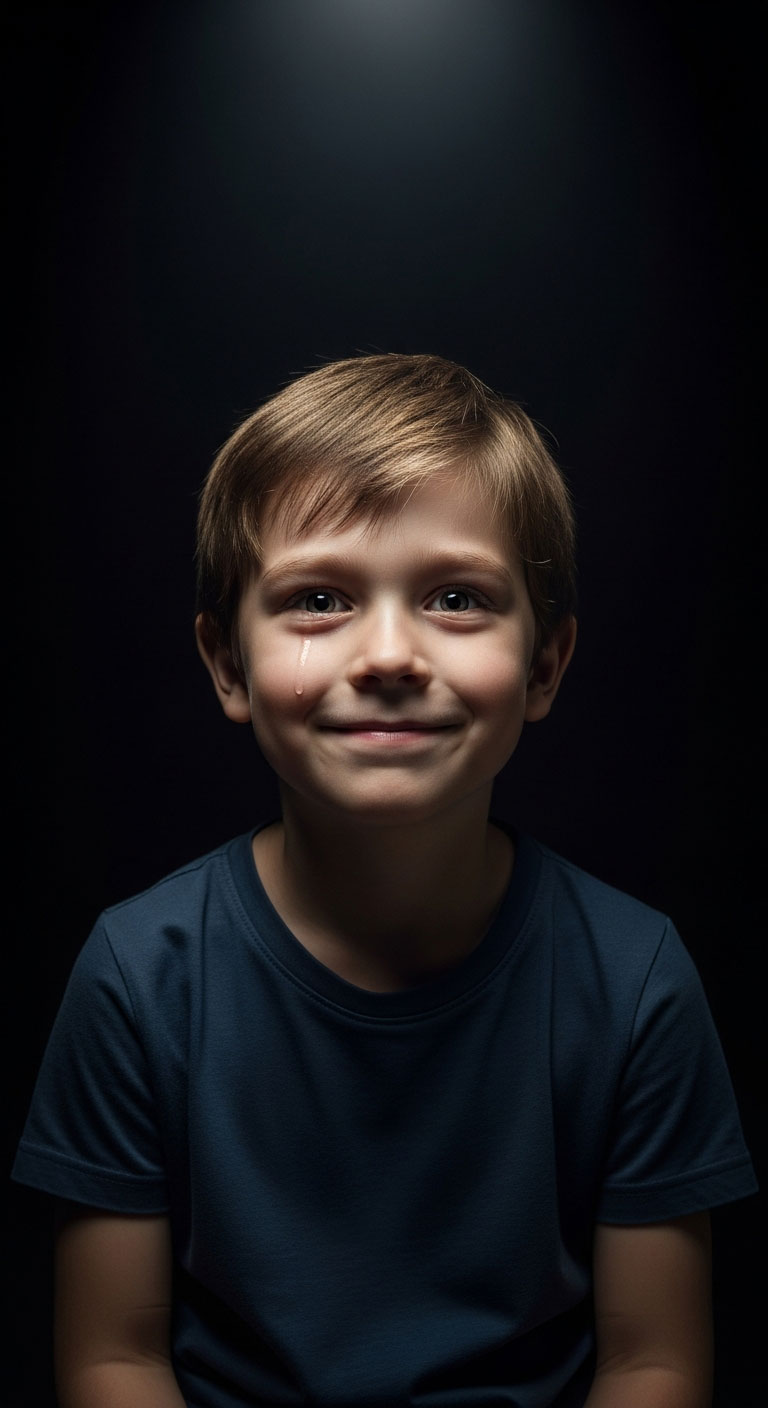
Some children don’t shout when they’re overwhelmed.
They don’t melt down.
They don’t challenge.
They withdraw.
They make themselves smaller, quieter, less visible. They learn not to ask questions, not to admit confusion, not to take up space. From the outside, they look “fine”.
They are calm.
Compliant.
Well-behaved.
Often, they are praised for it.
But inside, many of these children are holding fear, confusion, and shame. Their silence isn’t calm — it’s protection. They’ve learned that being invisible feels safer than being seen.
This is what we mean when we say children shouldn’t have to disappear in order to cope.
Coping that requires silence, masking, or self-erasure is not resilience. It is survival — and it comes at a cost that often appears much later.
What’s Really Happening in the Moment
When a child reacts — whether by refusing, answering back, shutting down, or exploding — adults often assume choice.
But in many moments of difficulty, the child’s nervous system is overwhelmed.
In survival mode:
- the thinking brain goes offline
- language access reduces
- reasoning becomes impossible
This isn’t defiance. It’s physiology.
So the critical question becomes:
Was this child capable of responding in that moment —
or did we demand something their nervous system couldn’t give?
When adults demand instant compliance, explanation, or calm from a child in survival mode, pressure increases — and behaviour escalates. Sanctions may follow, but no learning happens.
Because you can’t teach skills to a body in survival mode.
Skills come after regulation, not before.
Inclusion Isn’t About Lowering Standards
Inclusion is often misunderstood.
It is not about letting children “get away with things”.
It is not about removing boundaries.
Inclusion is about removing barriers so children can meet expectations.
Many schools operate under intense pressure: to be consistent, to evidence behaviour management, to protect staff and reputation. In that context, policies can become more important than people.
Sanctions are visible. Measurable. Defensible.
Adaptation, reflection, and relationship-building are harder to evidence — and so they are often overlooked.
But when schools focus on students meeting policies rather than policies meeting students, inclusion quietly disappears.
If changing adult approach — tone, timing, processing time, communication — prevents incidents altogether, then sanctions were never the solution.
They were a symptom of unmet need.
True accountability isn’t “you broke a rule, now you’re punished”.
It’s “what got in the way of success, and how do we remove it next time?”

Surviving Childhood Does Not Prepare You for Adulthood
Many neurodivergent children survive childhood by coping.
They mask.
They imitate.
They endure.
And often, adults say: “They’ll be fine when they’re older.”
But adulthood removes the structures that made survival possible.
Less routine.
More unspoken rules.
Greater expectations.
Less support.
If a young person has never been helped to understand themselves — their nervous system, their needs, their limits — they enter adulthood with survival strategies, not life skills.
When things become overwhelming, they don’t think:
This system doesn’t work for me.
They think:
There’s something wrong with me.
This is where burnout, anxiety, and collapse often appear — not because the person lacked resilience, but because resilience was built on endurance, not understanding.
Survival gets someone through childhood.
Understanding gets them through life.
Curiosity Unlocks Potential. Judgement Shuts It Down.
Judgement often sounds reasonable:
“You should know this by now.”
“There’s no excuse.”
“Others manage.”
But to a child, judgement feels like identity:
I’m failing. I’m disappointing people. I’m the problem.
Judgement shuts down curiosity, effort, and honesty. It pushes children into protection.
Curiosity does the opposite.
Curiosity says:
“Help me understand.”
“What made that hard?”
“What would have helped?”
Curiosity doesn’t remove boundaries.
It makes them reachable.
One adult willing to ask “Help me understand” can change the trajectory of a child’s life. Not by lowering expectations — but by removing fear.
Potential doesn’t disappear when children struggle.
It goes into hiding.
Curiosity invites it back out.

When Smiling Becomes a Shield
Towards the end of this series, a conversation brought everything together.
An amazing mum — also neurodivergent — was asked how she was. She smiled broadly and said:
“I’m here. I’m breathing.”
On the surface, that sounds positive. Coping. Fine.
But when it was gently suggested that her smile might be a barrier to getting support, her reply was heartbreaking:
“If I was to be myself — if I showed what I really feel — you wouldn’t want to know me.
I believe in positivity. I don’t want to be an emotional drain. People don’t like that.”
That smile wasn’t joy.
It was protection.
It was saying: please don’t decide I’m too much.
This is the quiet damage of toxic positivity — the belief that honesty makes us unlovable.
A Message for Children, Parents, and Professionals
If you’re a child who feels you have to be “good” to be safe — you don’t.
If you’re a parent holding everything together while smiling through exhaustion — you matter too.
If you’re a professional carrying emotional weight in silence — you’re human.
And if you’ve learned to say “I’m fine” when you’re not, just to be acceptable — you are not an emotional drain. You are not too much.
The goal is not to stop smiling.
The goal is to make it safe enough that smiling isn’t the only option.

A Different Way Forward
Imagine a world where:
- children don’t disappear to cope
- honesty is met with understanding
- policies flex to meet people
- support doesn’t require crisis
That’s what honest reality makes possible.
So when we hear:
“Smile, even though it’s breaking”
Let’s not turn it into a demand.
Let’s turn it into an invitation.
An invitation to say:
“I see you.”
“I believe you.”
“You don’t have to do this alone.”
And if today, all you can say is:
“I’m here. I’m breathing.”
That is enough.
And if you need to talk — to me, Gordon, or to someone who truly understands — please reach out.
You don’t have to carry this quietly anymore.
Before You Click Away…
If something in this blog stayed with you — even if you can’t quite name what — pause for a moment.
You don’t need to fix anything today.
You don’t need to be positive.
You don’t need to have the right words.
Just notice.
Notice:
- where you might be smiling to cope
- where your child might be disappearing to stay safe
- where honesty feels risky
And if this felt like it was describing you, please hear this:
You don’t have to carry it quietly.
One small step might be:
- letting yourself be honest
- asking for a conversation
- or simply acknowledging that this is hard
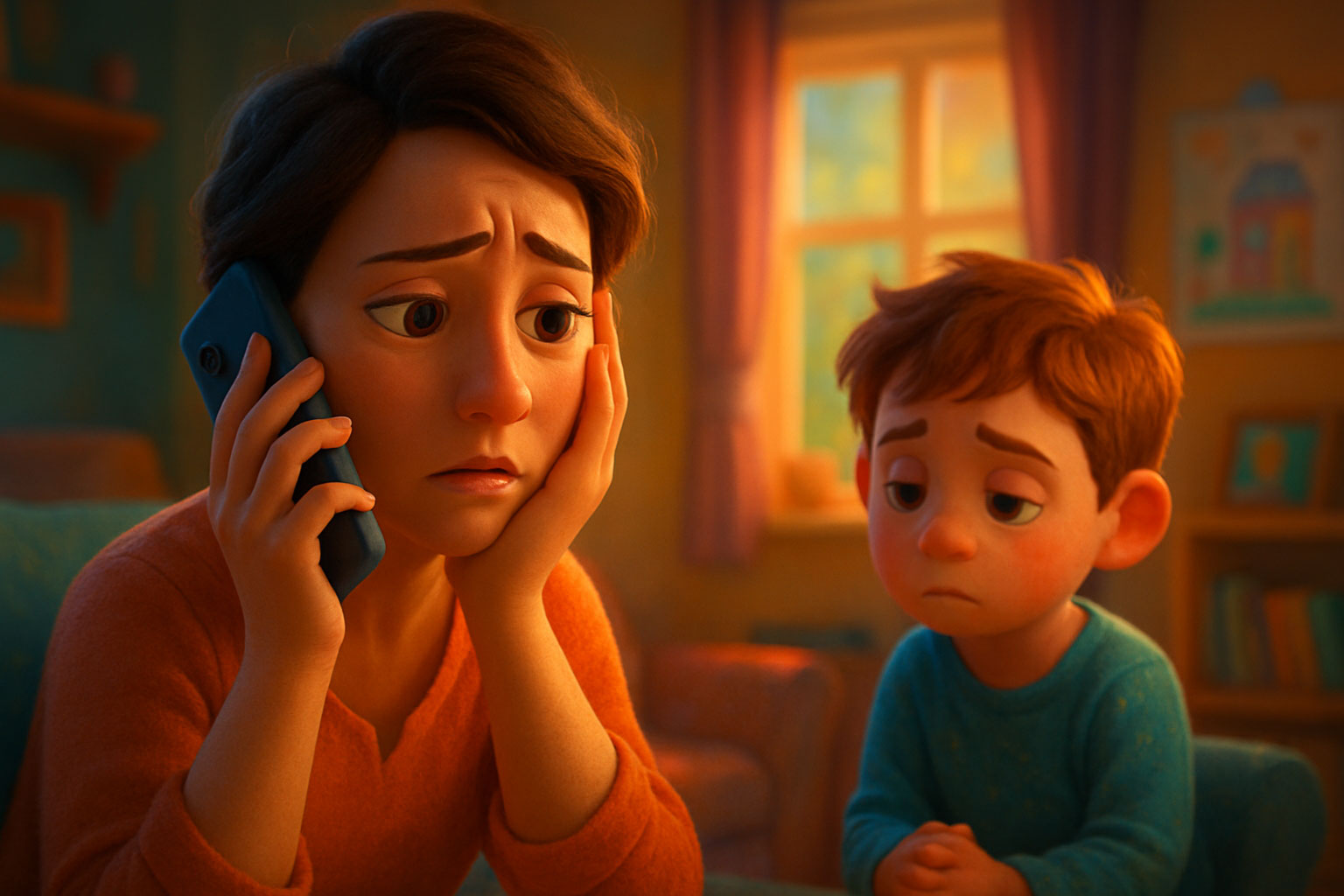
If it helps, you’re welcome to reach out to me — Gordon — or to someone you trust who understands this journey and will listen without judgement or pressure.
You don’t have to explain everything.
You don’t have to be “ready”.
Just being heard matters.
This community exists because so many parents, children, and neurodivergent adults have been told — directly or indirectly — to cope quietly.
Here, you don’t have to.
Whether you read, watch, listen, or simply know this space exists, you belong here.
And if today, all you can say is:
“I’m here. I’m breathing.”
That’s enough.